
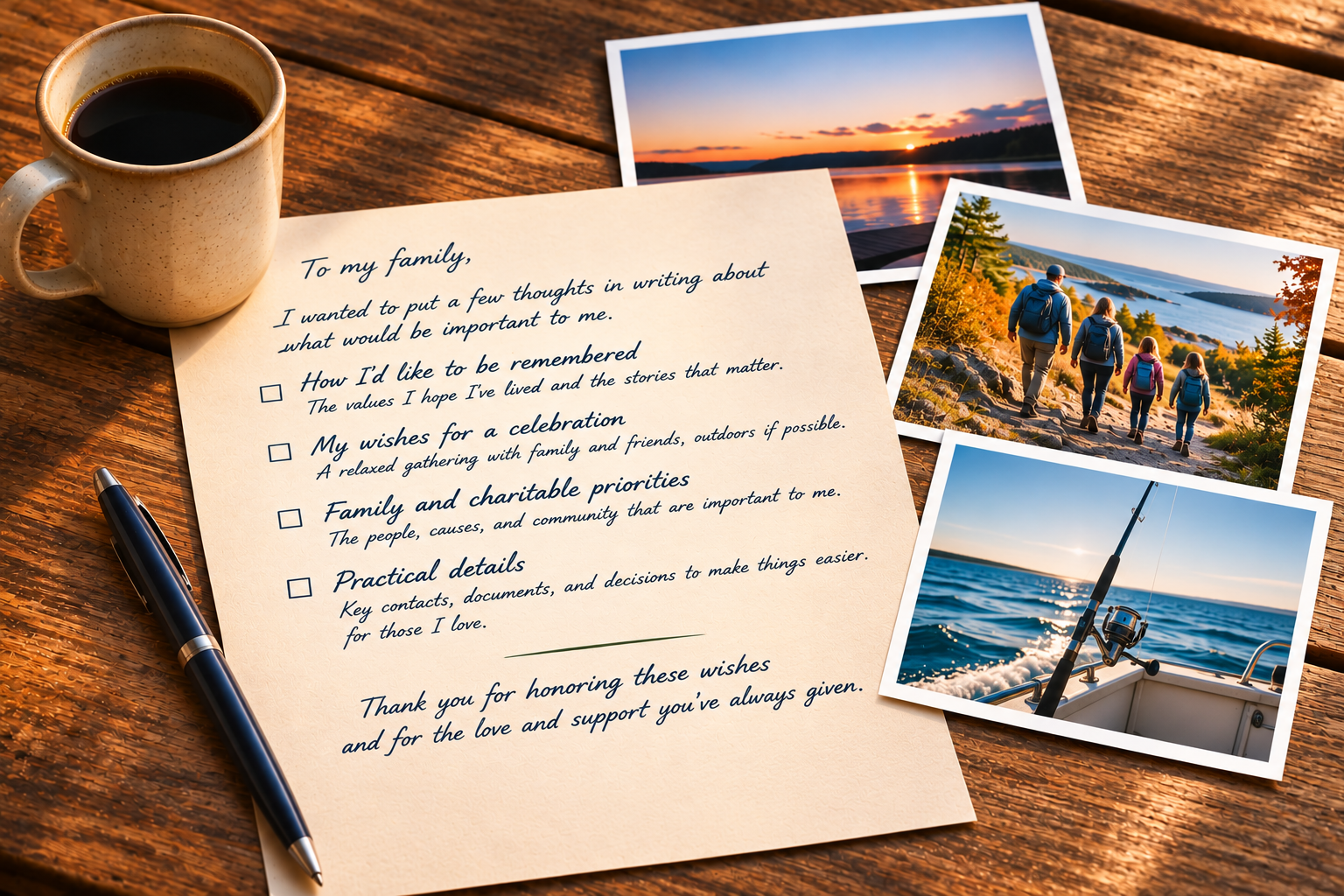
Recently, I attended a Celebration of Life for a fishing buddy who lost his battle with cancer. It was held along a river in Maine where he had been an oyster farmer. There were food trucks, a band, friends telling stories, and more than 300 people who came to celebrate his life. There were a few speeches, yet nothing too formal or somber. It felt like him.
By the end of the day, even someone who hadn’t known him well would have understood who he was, what mattered to him, and the impact he had on others. Those firepit moments are sure to be cherished.
Driving home, I found myself thinking about my own family. If something happened to me, would Val and the girls know what I’d want? Would they know whether I wanted a traditional funeral or a celebration like the one I had just attended? What stories, traditions, and values would I hope they carry forward?
We spend a lot of time helping families prepare financially for what happens after they’re gone. Maybe we should spend a little more time talking about what we want that day—and our legacy—to actually look like.
An Estate Plan Says Who Gets What.
What About Everything Else?
Estate planning addresses important questions: Who receives your assets? Who makes financial or health care decisions if you can’t? Who serves as executor or trustee? These questions matter. Yet they don’t answer some of the more personal ones:
How do you want to be remembered?
What do you want your family to know?
What traditions do you hope they will continue?
How would you like the people closest to you to celebrate your life?
Write Down Your Wishes
Most of us have opinions about our own funeral or Celebration of Life. We just haven’t shared them.
Church or somewhere else meaningful to you? A formal service or a party? Burial or cremation? Certain music, food, or traditions? Who would you want involved? Are there charities or organizations you’d like people to support?
You don’t need to plan every detail. Even one page describing what you’d like can spare your family difficult decisions during an emotional time.
Share Details Not in the Will
Your will isn’t the place for everything. Consider leaving a separate letter with practical information and personal wishes.
Where are important documents? Who should your family call? Are there personal possessions with stories behind them? Sometimes knowing that Dad wanted his fishing gear to go to a particular child or grandchild matters more to a family than another line in a legal document.
Tell the Stories Behind the Money
Many of our clients will eventually leave meaningful assets to children, grandchildren, or charities. Yet an inheritance doesn’t explain how it got there.
Why did you save?
What sacrifices did you make?
What mistakes did you learn from?
Why was education important to you?
Why did you support a particular charity?
What did your parents teach you?
Those stories provide context that an account statement never will.
Think About the Legacy Before the Inheritance
Legacy doesn’t begin when someone dies. It’s happening right now. It’s Sunday dinners, family vacations, volunteering, coaching, taking a child fishing, teaching a child to save, supporting causes you care about, and being the person friends call when they need help.
The Celebration of Life I attended wasn’t memorable because 300 people showed up. Three hundred people showed up because of the life he had lived before that day.
Start the Conversation
You don’t need to gather everyone around the dinner table and announce, “Let’s discuss my death.”
Start smaller. Tell your spouse what you’d want. Write down a few thoughts. Make sure that your estate documents are current, and that someone knows where to find them.
Consider writing a letter to your children or grandchildren—not necessarily to be read after you’re gone, either. Tell them what you’re proud of, what you’ve learned, and what you hope for them.
Financial planning is ultimately about using your resources to build the life you want. Good legacy planning asks one additional question: What do you want that life to mean to the people you leave behind?
Perennial Edge Tip: Write a
One-Page “When I’m Gone” Letter
This doesn’t need to be a legal document. Take 20 minutes and write down a few things you’d want your family to know:
- How you’d like your life celebrated
- People you’d want involved
- Music, traditions, or places that matter to you
- Charities or causes you’d like remembered
- Personal belongings with special meaning
- Anything you simply want your family to know
Keep it with your estate documents and tell someone you trust where it is. Then revisit it occasionally. Your attorney can make sure the legal documents are right. Your financial plan can make sure the money is organized. Only you can tell your family what mattered most to you.
Related Perennial Edge Insights: Planning Ahead for Peace of Mind and The Best Thing I’ve Done for My Children.